
Brain Health for Children
Parents often begin exploring brain health when they notice changes in how their child is learning, behaving, or sleeping.
A child who struggles to focus in school may also have restless sleep. A child with emotional outbursts may seem constantly tired. Others may complain of headaches, difficulty concentrating, or feeling overwhelmed by tasks that once felt manageable.
In many cases, these concerns develop gradually. Parents may sense that something is not quite right but may not have clear answers about why these challenges are occurring.
At LūM, brain health evaluation helps identify patterns in brain function that may be contributing to difficulties with attention, behavior, sleep, or emotional regulation.
When Parents Know Something Isn’t Quite Right
Many parents who come to LūM describe a similar experience. They know their child is capable, but something seems to be getting in the way. School may feel harder than it should. Sleep may be restless. Emotions may feel bigger or harder to regulate.
Often parents have already spoken with teachers, pediatricians, or other providers. They may have been given helpful suggestions, but the bigger picture can still feel unclear.
Our goal is to slow the process down, look carefully at what may be influencing a child’s brain function, and help families understand the underlying patterns that may be contributing to these challenges.
Signs a Child May Benefit from Brain Health Evaluation
Children can experience brain health challenges differently than adults.
Parents often seek evaluation when their child is experiencing concerns such as:
- Struggles with attention or difficulty focusing in school
- Behavioral outbursts or emotional dysregulation
- Learning difficulties
- Poor sleep, restless sleep or persistent fatigue
- Headaches or migraines
- ADHD-like symptoms
These concerns can affect academic performance, social development, and confidence.
Understanding the underlying factors influencing brain function can help guide a more effective path forward.
The Connection Between Sleep, Breathing, and Brain Development
One important factor that can influence brain health in children is sleep quality.
Because children’s brains are still developing, sleep and breathing issues can sometimes have a greater impact on attention, learning, and emotional regulation than parents might expect.
When children experience disrupted sleep or breathing difficulties during sleep, the brain may not receive the restorative rest it needs to function optimally.
When breathing is restricted or sleep is fragmented, brainwave activity can become disrupted, which may contribute to symptoms such as difficulty concentrating, brain fog, emotional dysregulation, and behavioral challenges.
This is why evaluating brain health alongside sleep and airway development can be an important part of understanding a child’s overall health.
This broader perspective often helps explain symptoms that previously seemed unrelated.
Understanding Brain Function Through Evaluation
At LūM, brain health evaluation is designed to better understand how a child’s brain is functioning.
This process may include:
- Reviewing health history and developmental patterns
- Assessing sleep quality and daily functioning
- Completing symptom questionnaires related to attention, mood, and cognition
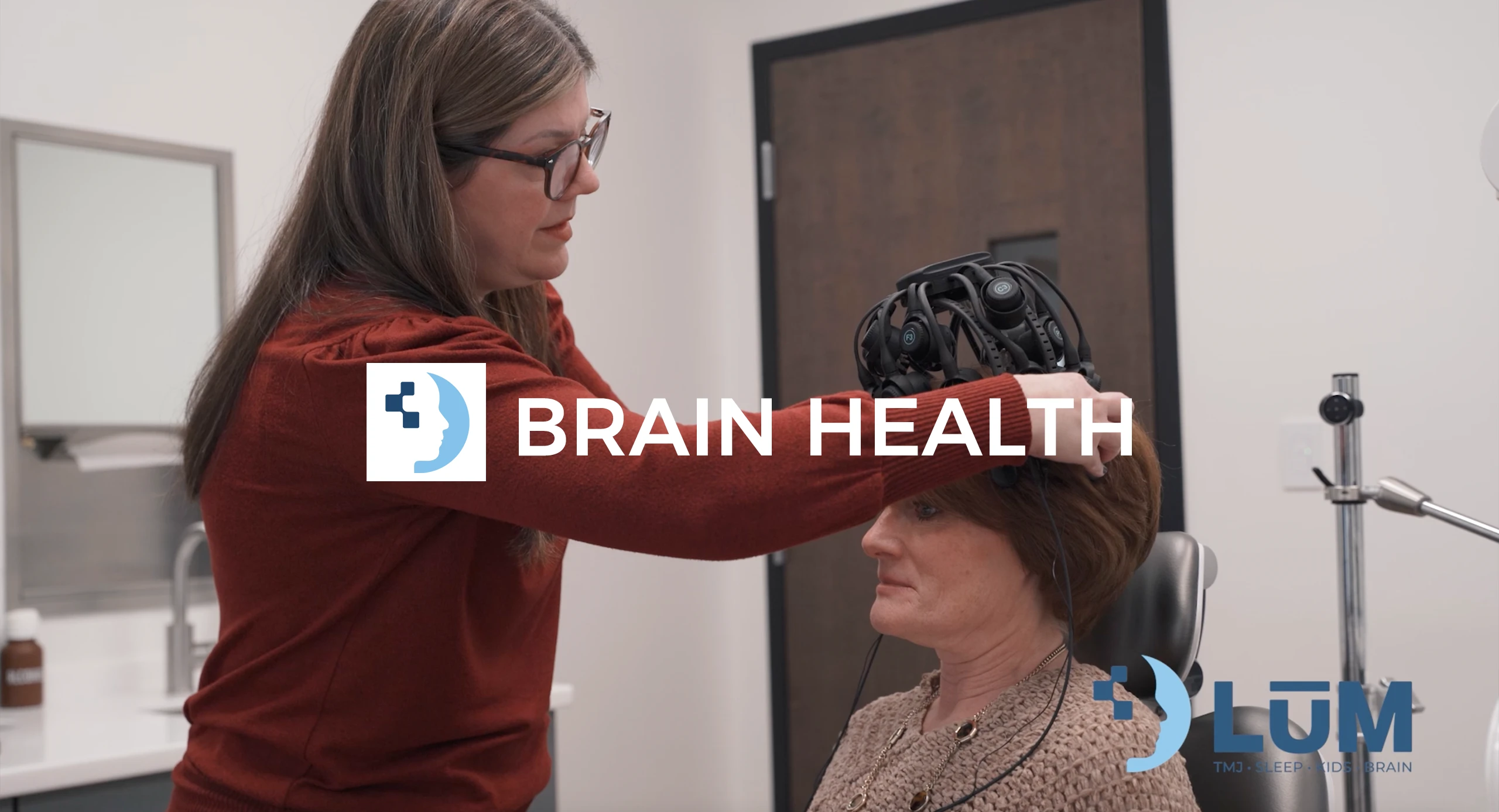
- Performing EEG brain mapping, which records brainwave activity across multiple regions of the brain
EEG brain mapping is a painless test that helps identify patterns in brainwave activity and determine whether disruptions may be related to a child’s symptoms.
This information allows us to build a personalized understanding of a child’s brain function.
Supporting Healthy Brain Development
Children’s brains are constantly developing.
When challenges with sleep, breathing, attention, or emotional regulation arise, identifying the underlying patterns early can help guide more effective care.
At LūM, our goal is to help children develop the healthiest possible foundation for learning, emotional resilience, and long-term well-being.
Brain Health Across Every Stage of Life
Brain health is important at every age.
Children may experience challenges related to development, learning, and behavior. Adults may seek care for focus, mood, sleep, or cognitive performance.
To learn more about brain health care for adults, visit: